
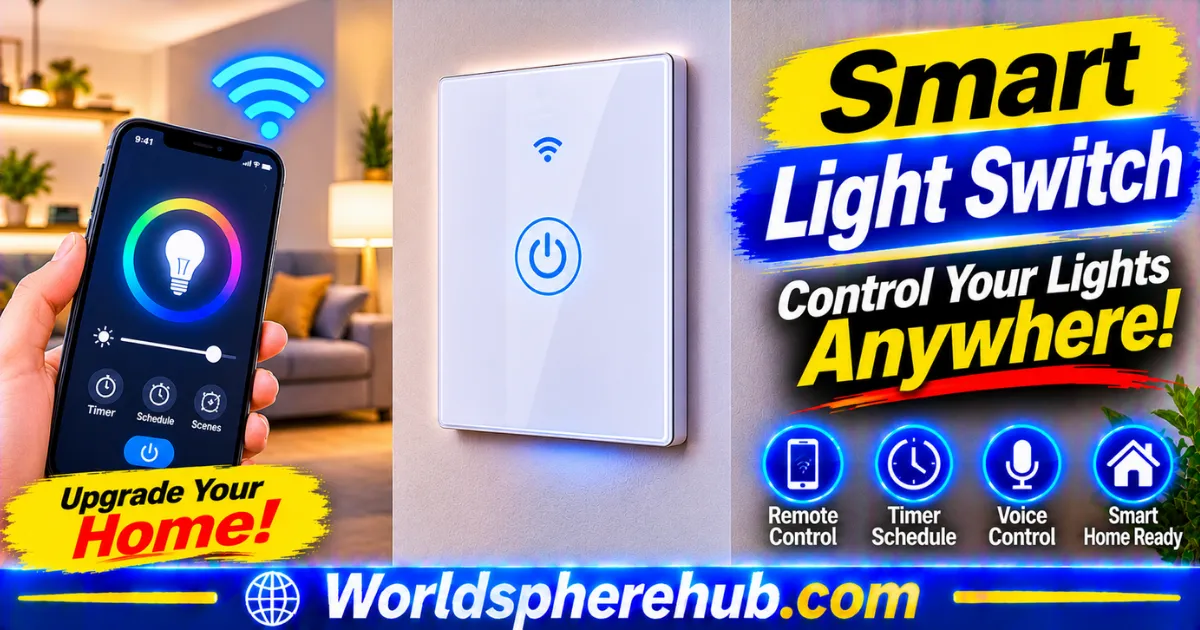
Smart Light Switch: Features and Key Benefits
SHORT DIRECT ANSWER
A smart light switch replaces a standard wall switch so you can control existing lights from a phone, voice assistant, or schedule. Key factors include wiring requirements, neutral wire needs, bulb compatibility, and ecosystem support. Features and installation difficulty vary by model, so verify specifications and consider hiring an electrician if unsure.
How a Smart Light Switch Works
Inside the switch is a small radio and a relay or electronic switching component. When you tap the app or speak a command, the radio receives the signal and the switch connects or disconnects power to the light. Most models also keep a physical paddle or button, so the switch still works by hand like a regular one.
Connection Types
The way a switch talks to your home network is one of the biggest buying factors.
| Connection | How It Works | Typical Trade-Off |
|---|---|---|
| Wi-Fi | Connects directly to your router | Simple setup, but many devices can crowd a network |
| Zigbee | Uses a low-power mesh network | Often needs a hub, usually very reliable |
| Z-Wave | Uses a separate low-power mesh network | Needs a hub, good range through the mesh |
| Bluetooth | Connects to a nearby phone | Limited range, may need a bridge for remote control |
| Thread with Matter | Newer low-power mesh with a shared standard | Works across more ecosystems, support is still growing |
There is no single best option. Wi-Fi models suit people who want to avoid extra hardware. Mesh-based models suit larger homes with many smart devices, since each powered switch can help relay signals.
Design and Physical Features
Smart switches come in several styles. Traditional toggle versions look like older switches, while rocker or paddle styles match the flat look common in modern homes. Some use a small touch panel or a row of buttons that can control scenes.
Paddle Style and Color
Most paddle-style models fit standard wall plates, and many come in white, ivory, black, or light almond finishes. Matching the color to your existing plates helps the switch blend in. Some models include small LED indicators that show status, which are useful in a dark room but may bother light sleepers in a bedroom.
Size and Wall Box Fit
A smart switch has electronics inside, so it can be deeper than a basic switch. In a crowded wall box with several wires, this can make installation tight. Gang boxes with multiple switches need extra care, and some manufacturers note derating rules when many dimmers share one box. Check the manual before buying.
Wiring Requirements You Need to Know
Wiring is where many installations succeed or stall, so it deserves careful attention.
The Neutral Wire
Many smart switches need a neutral wire to power their electronics. Homes built in recent decades often have one at the switch box, while older homes may not. If your box has no neutral, look for models designed to work without one. These usually rely on a small amount of current through the load, which can cause flicker or buzzing with some low-power bulbs.
Single-Pole and Three-Way Setups
A single-pole setup is the simple case, where one switch controls a light. A three-way setup uses two switches to control the same light from different places, such as the top and bottom of a staircase. Three-way installs often need a companion or secondary switch and clearer wiring labels. Read the product listing closely to see which setups a model supports.
Load Ratings
Every switch has a maximum load rating, and many dimmers also have a minimum. Modern LED fixtures draw very little power, so a switch with a high minimum load can cause flicker or may not work properly. Look for models listed as LED-compatible and check both minimum and maximum load.
Dimming, Scenes, and Automation
Dimmer versions of the smart switch let you adjust brightness, and some allow you to set how quickly lights fade. Dimming works best with bulbs marked dimmable, and the match between switch and bulb matters. A poor match can cause flicker, a limited dimming range, or humming.
Scenes let one command change several lights at once, such as a movie scene that dims the living room and turns off the kitchen. Schedules and routines automate the rest. You can have porch lights turn on at sunset, hallway lights glow softly at night, or all lights switch off at bedtime.
Some models add occupancy or motion sensing, which turns lights on when you enter a room and off after a period of inactivity. These are handy in laundry rooms, garages, and bathrooms, though the sensor placement and sensitivity matter.
Software and Ecosystem Support
The app and platform support shape the daily experience. Most smart switches work with at least one major assistant, such as Amazon Alexa, Google Home, or Apple Home, and some support several. Matter-enabled models aim to work across platforms with less friction, although feature support can still differ between ecosystems.
Local Control and Reliability
Some switches can operate locally even when the internet is down, while others depend on the cloud for remote features. If reliability matters, look for models that continue to work with the physical paddle and local schedules during an outage. A switch that still works by hand when the network fails is a basic but important safeguard.
Privacy and Updates
Smart devices receive firmware updates, and long-term support varies. It is worth choosing a brand with a track record of updating devices. Review the app’s permissions and privacy settings, and use a strong, unique password for your account.
Energy and Convenience Benefits
A smart switch can make everyday life easier in small but noticeable ways. You can turn off lights you forgot from your phone, set a schedule that mimics presence while you travel, and create dependable routines for mornings and evenings.
Some models report energy use, which helps you see how much lighting costs you over time. Automatic shutoff and motion sensing can reduce wasted light, though actual savings depend on your habits and the efficiency of your bulbs. LED bulbs already use far less power than older incandescent bulbs, so the larger gain from a smart switch is often convenience rather than dramatic savings.
Smart Switch Versus Smart Bulbs
Both approaches have a place. A smart switch is a good fit for fixtures with several bulbs, recessed lighting, ceiling fans with lights, and any room where people expect the wall switch to keep working. It also avoids buying and managing many individual smart bulbs.
Smart bulbs make more sense for lamps, color effects, and rooms with no suitable wiring. If you want colored light or very specific effects, bulbs offer more variety. A smart switch will not change bulb color, only power and brightness.
Installation and Safety
Installing a smart switch is a common home project, but it involves household electrical wiring. Always turn off the circuit at the breaker, confirm with a voltage tester that the power is off, and photograph the existing wiring before disconnecting anything. Label the wires, especially in three-way setups.
If you feel unsure at any point, hire a licensed electrician. Local codes and rules vary, and some areas require permits or professional work. Never force a switch into a crowded box, and make sure all connections are secure.
Limitations and Things to Check
Smart switches are useful, but they have trade-offs.
- Neutral wire needs: Without one, your choices narrow and flicker becomes more likely.
- Compatibility gaps: Some bulbs, fans, or older dimmable fixtures do not pair well with certain switches.
- Hub requirements: Mesh models may need a hub or border router, which adds cost and setup.
- Guest confusion: Visitors may expect a plain switch, and paddle behavior can feel different from a standard one.
- Network dependence: Some features stop working when Wi-Fi or the cloud service is down.
- Larger size: Bulky designs can be a tight fit in crowded wall boxes.
How to Choose the Right Smart Light Switch
Start by checking your wiring. Find out whether your boxes have a neutral wire and whether the lights are single-pole or three-way. Then look at your lights: LED, dimmable, or fan-light combinations all affect which model works.
Next, think about your ecosystem. Pick a switch that supports the assistant and platform you already use, and consider Matter support for more flexibility later. Finally, weigh the connection type. Wi-Fi is simple, while Zigbee, Z-Wave, or Thread suit larger smart homes.
Frequently Asked Questions
1: Do I need a neutral wire for a smart light switch?
Many models do, because the electronics need constant power. Some are designed to work without a neutral, but they may cause flicker with certain low-power LED bulbs. Check the product details and your wall box before buying.
2: Will a smart light switch work with any bulb?
Most work with standard bulbs, but dimming needs dimmable bulbs, and very low-power LEDs can cause flicker. Do not use smart bulbs on a smart switch circuit unless the switch stays on, because cutting power breaks the bulb’s connection.
3: Can I install a smart light switch myself?
Many homeowners do, and instructions are usually clear. Turn off the breaker, test for power, and follow the wiring guide closely. If your wiring is unclear or older, or local rules require it, hire a licensed electrician.
4: Does a smart light switch work without Wi-Fi?
It depends on the model. Wi-Fi switches may lose remote features when the network is down, while mesh models can keep local control through a hub. Most still work manually with the physical paddle.
5: Is a smart light switch better than smart bulbs?
Neither is better in every case. A switch suits multi-bulb fixtures and rooms where the wall switch should always work. Bulbs suit lamps and color effects, and they need no wiring changes.
Explore More Continue Reading Our Guide on: Portable DVD Player Review: Features & Travel
Bluetooth Keyboard Review: Features & Comfort
Wireless Charging Pad: Qi2 Speed, Cases, Tips
USB-C Charger Buying Guide: Wattage Made Easy
Wireless HDMI Transmitter: Ditch Cables Today
Aura Digital Picture Frame Review: Full Guide
Conclusion
A smart light switch adds remote control, scheduling, and voice support to existing lighting without replacing bulbs. Benefits include convenience and energy awareness. Limitations include wiring requirements, neutral wire needs, ecosystem compatibility, and installation difficulty, so confirm specifications before buying.