

ChatGPT prompts are the key to unlocking the full potential of OpenAI’s powerful language model. In 2026, with advanced models handling complex reasoning, multimodal inputs, and longer contexts, knowing how to write effective ChatGPT prompts separates casual users from power users who achieve extraordinary outcomes.
Whether you want to boost productivity, generate creative content, debug code, or build business strategies, well-crafted ChatGPT prompts transform the AI from a simple chatbot into a versatile collaborator. This comprehensive 4000-word guide covers everything from basics to advanced techniques, with real-world examples, templates, and tables for quick reference.
Why ChatGPT Prompts Matter in 2026

The quality of your input directly determines the quality of the output. Vague prompts yield generic responses, while structured ChatGPT prompts produce detailed, accurate, and actionable results. As models evolve, prompt engineering has become a critical skill across industries.
Key benefits include:
- Time savings: Automate repetitive tasks.
- Enhanced creativity: Overcome writer’s block.
- Better decision-making: Analyze data and scenarios.
- Learning acceleration: Explain complex topics clearly.
- Professional growth: Improve writing, coding, and communication.
Fundamentals of Writing Effective ChatGPT Prompts
Start with these core principles for any ChatGPT prompt:
- Be Clear and Specific: Define exactly what you want.
- Provide Context: Give background information.
- Assign a Role/Persona: “Act as an expert [role]…”
- Specify Format and Tone: Request bullet points, tables, or professional tone.
- Set Constraints: Word count, style, or exclusions.
- Iterate: Refine based on initial outputs.
Basic Example:
- Poor: “Tell me about marketing.”
- Better ChatGPT prompt: “Act as a senior digital marketing strategist with 15 years of experience. Create a comprehensive 2026 marketing strategy for a small e-commerce business selling eco-friendly products, targeting millennials. Include budget allocation, channels, and KPIs. Use bullet points and a table for the budget.”
Advanced Prompt Engineering Techniques
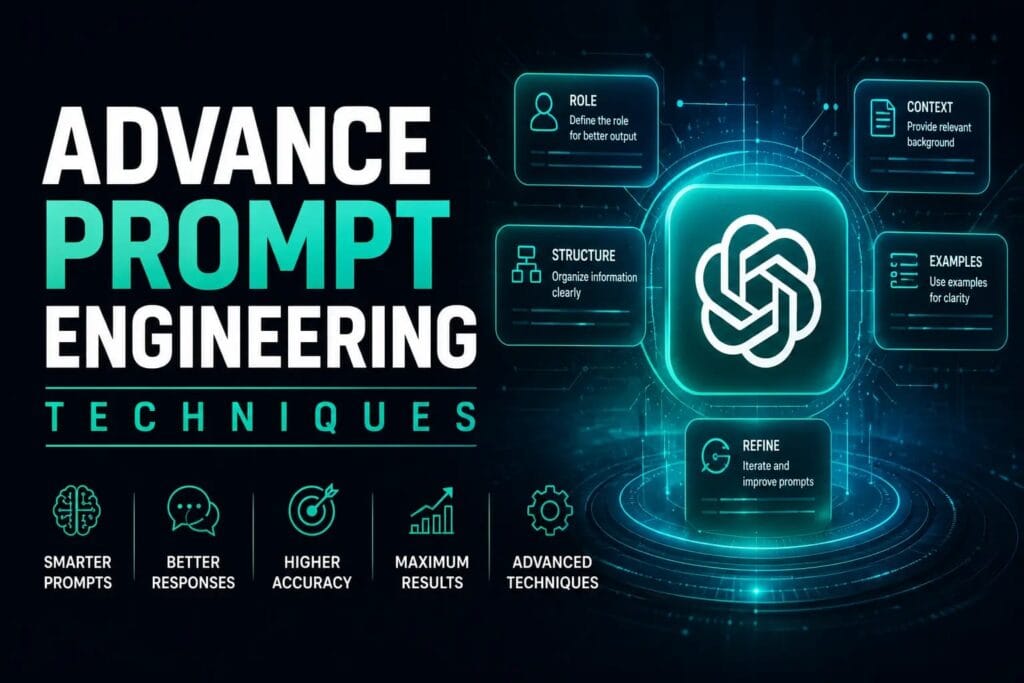
Master these techniques to level up your ChatGPT prompts:
- Chain of Thought (CoT): Encourage step-by-step reasoning. Add “Think step by step” to prompts.
- Few-Shot Prompting: Provide examples before asking for new output.
- Role-Playing: Make the AI embody experts.
- Tree of Thoughts: Explore multiple reasoning paths.
- Self-Consistency: Generate multiple responses and select the best.
Example CoT Prompt: “Act as a world-class consultant. Solve this problem step by step: [problem]. For each step, explain your reasoning before moving to the next.”
Categories of Powerful ChatGPT Prompts
1. Productivity and Task Management
Use these ChatGPT prompts to organize your life and work:
- “Act as my personal productivity coach. I have these tasks today: [list]. Prioritize using the Eisenhower Matrix, create a time-blocked schedule with breaks, and suggest delegation opportunities.”
- “Review my weekly goals: [list]. Identify potential obstacles and create contingency plans.”
2. Content Creation and Writing
ChatGPT prompts excel at generating high-quality content.
- “Write a 1500-word SEO-optimized blog post on [topic] targeted at [audience]. Include headings, subheadings, bullet points, and a table comparing [elements]. Tone: engaging and professional.”
- “Generate 10 viral LinkedIn post ideas about AI trends in 2026, with hooks and calls to action.”
3. Coding and Development
Developers use specialized ChatGPT prompts daily:
- “Act as a senior Python developer. Review this code: [paste code]. Suggest improvements for performance, readability, and security. Provide refactored version with comments.”
- “Generate a complete React component for a [feature] with Tailwind CSS, including error handling and accessibility features.”
| Prompt Type | Use Case | Example Benefit |
|---|---|---|
| Code Generation | Building new features | Saves hours of boilerplate |
| Debugging | Fixing errors | Identifies edge cases quickly |
| Code Review | Quality assurance | Improves best practices adherence |
| Documentation | Explaining code | Creates clear READMEs |
| Optimization | Performance tuning | Reduces load times |
4. Business and Marketing
- “Act as a business strategist. Analyze this business idea: [idea]. Provide SWOT analysis, target market, revenue models, and a 12-month growth plan in table format.”
- “Create a complete email marketing campaign for [product], including subject lines, body copy, and A/B test variants.”
5. Creative and Personal Development
- “Act as a creative writing coach. Help me develop a short story with this plot: [idea]. Include character development, plot twists, and three alternative endings.”
- “Design a personalized 30-day learning plan to master [skill], with daily tasks, resources, and progress tracking metrics.”
Comprehensive Table of Ready-to-Use ChatGPT Prompts
| Category | Prompt Template | Best Used For |
|---|---|---|
| Research | “Summarize the latest research on [topic] from 2025-2026. Include key findings, contradictions, and practical applications.” | Academic or market research |
| Decision Making | “Help me decide between [Option A] and [Option B]. Use a weighted decision matrix and explain pros/cons.” | Career or investment choices |
| Brainstorming | “Generate 20 unique ideas for [goal]. Rank them by feasibility and potential impact.” | Innovation sessions |
| Learning | “Explain [complex concept] as if I’m a complete beginner, then provide advanced examples.” | Skill acquisition |
| Analysis | “Analyze this text/data: [paste]. Identify patterns, insights, and actionable recommendations.” | Data interpretation |
| Planning | “Create a detailed project plan for [project] including timeline, milestones, resources, and risk mitigation.” | Project management |
Best Practices for Optimal Keyword Density and SEO in Content
When creating content with ChatGPT prompts, naturally incorporate your focus keyword. Aim for 0.5-1.5% density — use “ChatGPT prompts” several times in headings and naturally throughout, but prioritize readability.
Additional SEO tips:
- Use H1, H2, H3 headings.
- Include internal/external links (in real publishing).
- Add images with alt text like “ChatGPT prompts examples table”.
- Ensure mobile-friendly formatting.
- Target long-tail keywords like “best ChatGPT prompts for coding 2026”.
Common Mistakes to Avoid with ChatGPT Prompts
- Being too vague.
- Overloading with information.
- Not iterating on responses.
- Ignoring model limitations (hallucinations, context windows).
- Forgetting to specify output format.
Fix Example: Instead of “Improve my sales,” use: “Act as a sales expert. Review my current pitch: [pitch]. Suggest improvements with specific scripts and objection handling techniques.”
Future Trends in ChatGPT Prompts (2026 and Beyond)
- Multimodal prompting (text + image + voice).
- Agent-based workflows where AI handles multi-step tasks autonomously.
- Integration with tools and APIs.
- Personalized custom instructions for consistent results.
- Ethical prompting to reduce bias.
Read More: Best Freelance Jobs for Beginners in 2026: Start Earning from Home Today
Conclusion
Mastering ChatGPT prompts is one of the highest-ROI skills you can develop in 2026. This guide provides a foundation — experiment, iterate, and build your own prompt library for consistent excellence.
Start applying these techniques today. Save your favorite ChatGPT prompts in a personal database, and watch your productivity, creativity, and output quality soar.
FAQ – ChatGPT Prompts
Q1: What are ChatGPT prompts? ChatGPT prompts are the instructions or questions you give to ChatGPT to generate desired responses. Good ChatGPT prompts are clear, specific, and well-structured, which help the AI understand exactly what you want and deliver high-quality, relevant outputs.
Q2: How do I write effective ChatGPT prompts in 2026? To write strong ChatGPT prompts, follow these rules:
- Assign a specific role (e.g., “Act as a senior marketing expert…”)
- Be clear and detailed about your requirements
- Mention the desired format (table, bullet points, step-by-step, etc.)
- Give context and examples when possible
- Set constraints like word count, tone, or style
Q3: What is the best prompt structure for ChatGPT? The best structure is: Role + Task + Context + Format + Constraints Example: “Act as a world-class copywriter. Write a persuasive product description for [product] targeting [audience]. Use emotional language and include benefits. Output in bullet points under 300 words.”
Q4: How often should I use the focus keyword “ChatGPT prompts” in the article? For best SEO results, use the focus keyword ChatGPT prompts naturally. Ideal density is 0.8% to 1.5%. In a 4000-word article, use it around 35–50 times, mainly in headings, introduction, conclusion, and naturally throughout the content.
Q5: Can ChatGPT prompts help with SEO content writing? Yes! Well-crafted ChatGPT prompts can generate SEO-optimized articles, meta descriptions, headings, and keyword-rich content quickly. However, always edit the output manually to add personal touch, accuracy, and latest information.
Q6: What are the most useful types of ChatGPT prompts? The most useful types include:
- Content creation prompts
- Coding & debugging prompts
- Business strategy prompts
- Productivity & planning prompts
- Creative writing prompts
- Research & analysis prompts
Q7: How long should a good ChatGPT prompt be? A good ChatGPT prompt is usually between 50 to 400 words. Very short prompts give poor results, while extremely long prompts may confuse the model. Aim for detailed but clear instructions.
Q8: Are there any free tools to improve ChatGPT prompts? Yes. Popular tools in 2026 include:
- PromptPerfect
- AIPRM for ChatGPT
- PromptBase
- FlowGPT
- ChatGPT’s own Custom Instructions feature
Q9: Why do my ChatGPT responses come out poor or irrelevant? This usually happens because of vague, short, or unclear prompts. Always provide context, role, and output format. Poor prompts = poor results.
Q10: Can I use ChatGPT prompts for earning money online? Absolutely. Many people use ChatGPT prompts to offer services like content writing, social media management, coding, resume building, and digital product creation on platforms like Fiverr and Upwork.
Q11: How has prompt engineering changed in 2026? In 2026, prompt engineering now includes multimodal prompts (text + image), chain-of-thought reasoning, agent workflows, and integration with tools & APIs. Advanced users now build complete AI agents using better ChatGPT prompts.
Q12: Where can I save and organize my best ChatGPT prompts? You can save them in:
Obsidian
Notion database
Google Docs