
reelancing has become one of the most accessible ways to earn money in today’s digital economy. If you’re looking for freelance jobs for beginners, you’re in the right place. Whether you’re a student, stay-at-home parent, recent graduate, or someone tired of traditional 9-to-5 jobs, freelancing offers flexibility, independence, and the potential for good income.
In 2026, the freelance market continues to grow rapidly due to remote work trends, AI tools, and businesses outsourcing tasks. Beginners can find opportunities without advanced degrees or years of experience. This comprehensive guide covers everything you need to know about freelance jobs for beginners, including in-demand skills, platforms, step-by-step instructions, earnings potential, and proven strategies for success.
What Is Freelancing and Why Is It Perfect for Beginners?
Freelancing means working independently on projects for multiple clients instead of being employed by one company. You set your own hours, choose your clients, and work from anywhere with an internet connection.
Benefits for beginners:
- Low startup costs — often just a computer and internet.
- Learn while earning.
- Build a portfolio quickly.
- Flexible schedule.
- Unlimited income potential as you gain experience.
Many beginners start with zero experience by offering simple services like data entry or social media management. The key is starting small and scaling up.
Top In-Demand Freelance Jobs for Beginners in 2026
Here are some of the best freelance jobs for beginners based on current market demand:
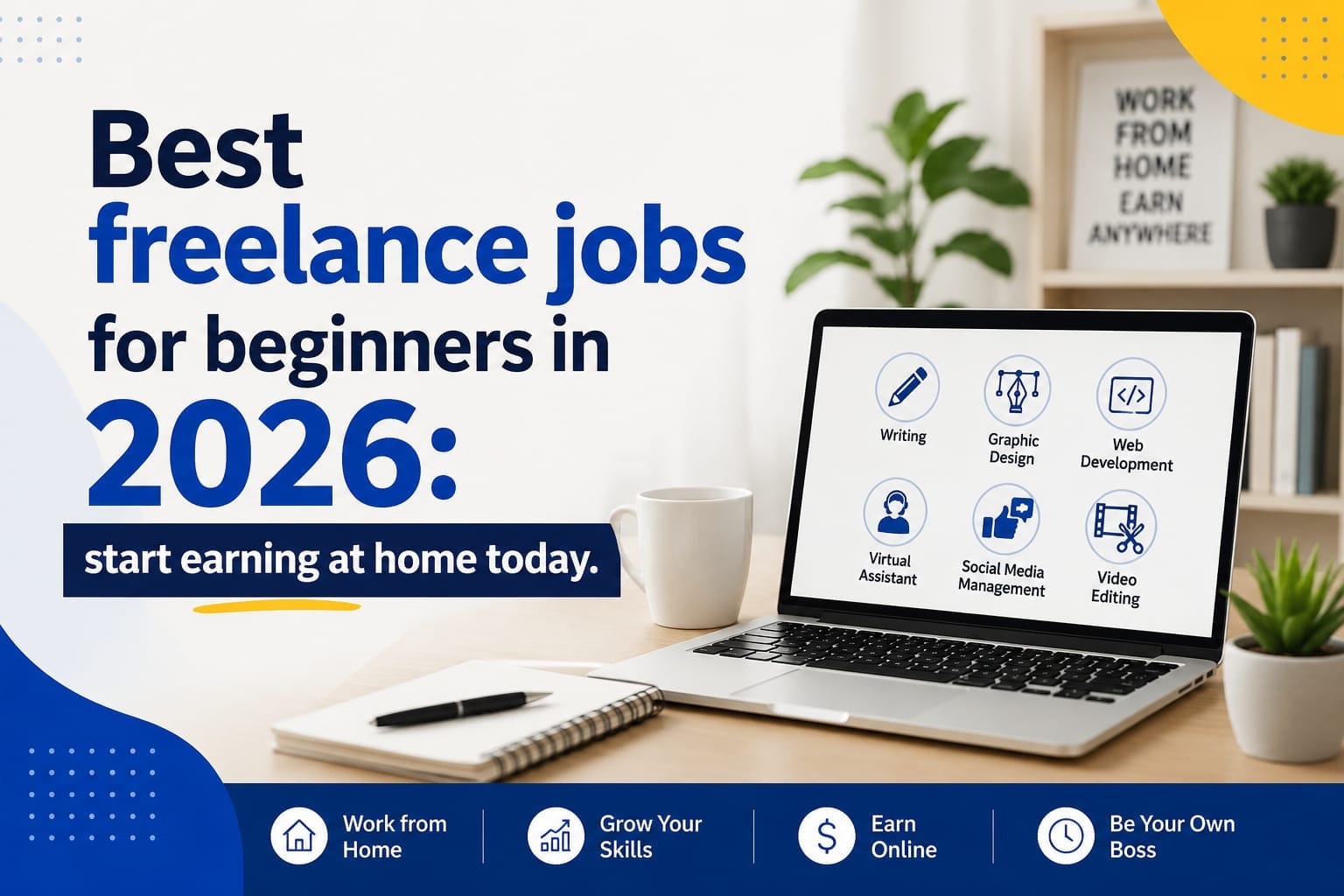
- Content Writing — Write blog posts, articles, or website copy.
- Virtual Assistant (VA) — Handle emails, scheduling, and admin tasks.
- Graphic Design — Create logos, social media graphics using Canva or basic tools.
- Data Entry — Input information into spreadsheets.
- Social Media Management — Post content and engage audiences.
- Video Editing — Edit short videos for YouTube or TikTok.
- SEO Services — Optimize content for search engines.
- Transcription — Convert audio to text.
- Proofreading/Editing — Review documents for errors.
- Web Development — Build simple websites with no-code tools.
- Online Tutoring — Teach subjects you’re good at.
- Customer Support — Help clients via chat or email.
- Email Marketing — Create newsletters.
- AI Prompt Engineering — Craft effective prompts for AI tools.
- Translation (if bilingual).
- Voiceover Work.
- Surveys/Microtasks (entry-level).
- Project Management Assistance.
Comparison Table: Beginner-Friendly Freelance Jobs
| Job Title | Difficulty Level | Average Hourly Rate (USD) | Skills Needed | Best For |
|---|---|---|---|---|
| Data Entry | Very Easy | $10–20 | Typing, attention to detail | Absolute beginners |
| Virtual Assistant | Easy | $15–30 | Organization, communication | Students, parents |
| Content Writing | Easy-Medium | $15–40 | Writing, research | Creative people |
| Graphic Design (Canva) | Easy-Medium | $20–50 | Creativity, design tools | Visual learners |
| Social Media Management | Medium | $20–45 | Marketing, trends | Social media users |
| Video Editing | Medium | $25–60 | Editing software | Tech-savvy beginners |
| SEO Writing | Medium | $20–50 | SEO knowledge | Writers wanting growth |
These rates are averages from platforms like Upwork in 2026.
Best Platforms for Freelance Jobs for Beginners
Choosing the right platform is crucial. Here are top recommendations:
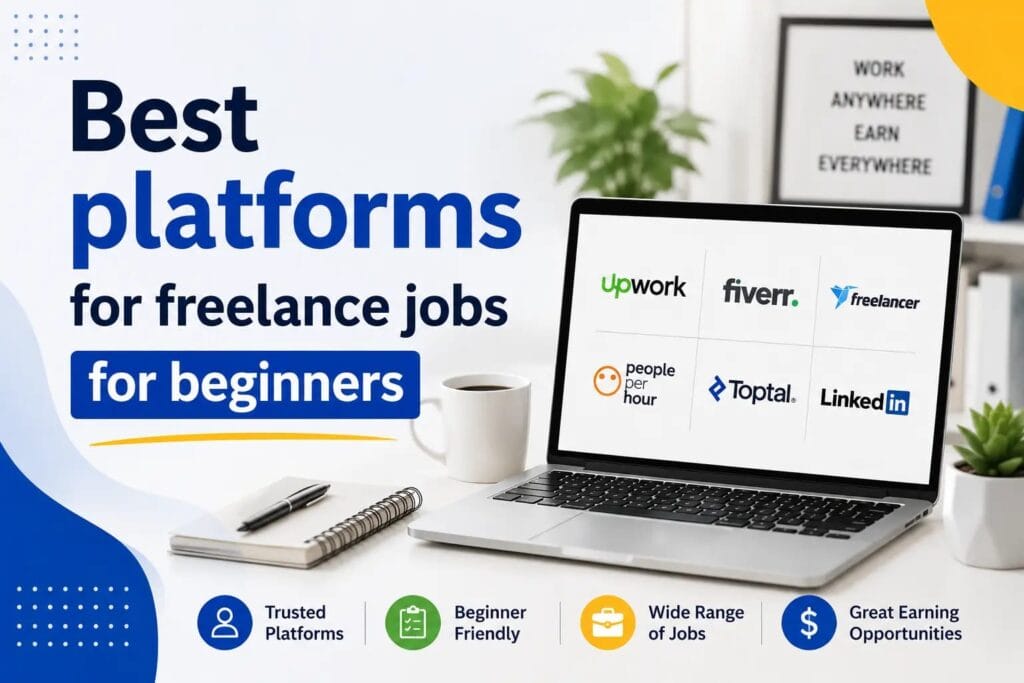
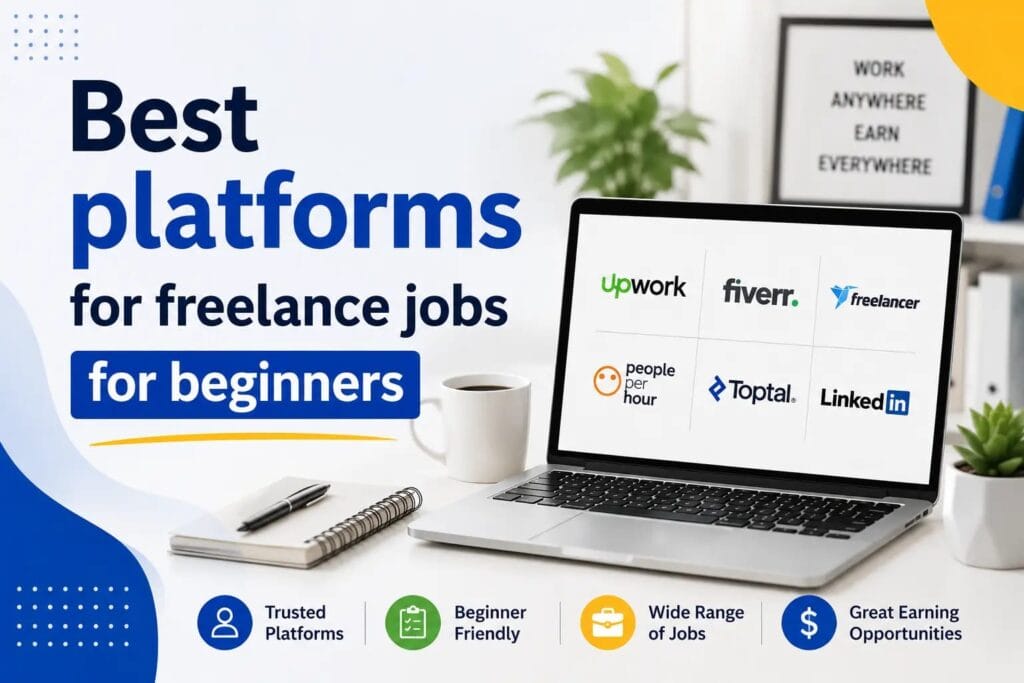
- Fiverr: Great for beginners. Create “gigs” and let clients come to you. Ideal for creative services.
- Upwork: Largest marketplace. Good for long-term clients. Start with proposals.
- Freelancer.com: Bid on projects.
- PeoplePerHour: Beginner-friendly with hourly or fixed-price work.
- Jobbers.io: Commission-free option.
- Others: Contra, SolidGigs, LinkedIn, Guru.
Platform Comparison Table:
| Platform | Best For Beginners? | Fees | Payment Protection | Ease of Getting Started |
|---|---|---|---|---|
| Fiverr | Yes (High) | 20% | Yes | Very High |
| Upwork | Yes | 10% | Strong | High |
| PeoplePerHour | Yes | Varies | Yes | High |
| Jobbers.io | Yes | 0% Commission | Yes | Medium |
Step-by-Step Guide: How to Start Freelance Jobs for Beginners
Step 1: Identify Your Skills List what you’re good at or willing to learn. No experience? Start with transferable skills like communication or organization.
Step 2: Learn Basic Skills Use free resources:
- YouTube tutorials
- Coursera, Udemy (affordable courses)
- Canva for design
- Google Docs for writing
Step 3: Create a Portfolio Even beginners can build one:
- Write sample articles.
- Design mock logos.
- Offer free work to friends/family for testimonials.
Step 4: Set Up Profiles Optimize your profiles with professional photos, clear descriptions, and keywords like “reliable beginner freelancer.”
Step 5: Find Your First Client
- Start with low rates ($5–10/hour) to build reviews.
- Apply to 10–20 jobs daily on Upwork.
- Network on LinkedIn and Reddit.
Step 6: Deliver Quality Work Meet deadlines and communicate well to get repeat clients and 5-star reviews.
Step 7: Scale Up Raise rates as you gain experience. Specialize in one niche.
Essential Skills to Learn for Freelance Jobs for Beginners
Focus on these high-demand areas:
- Digital Marketing Basics
- Content Creation Tools (Canva, CapCut, Grammarly)
- Basic Coding (HTML/CSS for websites)
- AI Tools (ChatGPT for productivity)
- Time Management
Many beginners succeed by mastering one tool deeply rather than many superficially.
Real Earnings Potential and Success Stories
Beginners often earn $200–500/month in the first 3 months. With consistency, this can grow to $2,000–5,000+/month within a year. High earners specialize and build client relationships.
Case Study Example: Many virtual assistants start with admin tasks and move into higher-paying project management.
Tips for Success in Freelance Jobs for Beginners
- Build a personal brand on social media.
- Use contracts for every project.
- Track time and expenses.
- Continuously learn new skills.
- Diversify income streams.
- Manage client expectations.
- Handle taxes properly (use tools like QuickBooks).
- Avoid burnout by setting boundaries.
Common Mistakes Beginners Make (And How to Avoid Them)
- Underpricing services.
- Poor communication.
- Taking too many projects at once.
- Ignoring marketing.
- Not building an email list.
Advanced Strategies to Grow Your Freelance Business
Once comfortable, consider:
- Creating digital products (ebooks, courses).
- Building a website.
- Hiring subcontractors.
- Niche down (e.g., “SEO for e-commerce”).
Future Trends in Freelance Jobs for 2026 and Beyond
AI integration, remote collaboration tools, and demand for sustainable business practices will create new opportunities. Beginners who adapt quickly will thrive.
Read More: Best Free AI Video Generators 2026: Top Tools Tested for Quality, Limits & No Watermark Options
Conclusion: Your Journey with Freelance Jobs for Beginners Starts Now
Freelance jobs for beginners are more accessible than ever. Success comes from action, persistence, and continuous improvement. Start today by picking one skill, creating one gig or profile, and applying to your first job.
The freedom and income potential are worth the effort. Many have turned freelancing into full-time careers. You can too!
FAQ
Q1: What are the best freelance jobs for beginners with no experience? The best freelance jobs for beginners with no experience include Data Entry, Virtual Assistant, Content Writing, Social Media Management, Canva Graphic Design, Transcription, and Proofreading. These jobs require minimal technical skills and you can start learning them quickly through free YouTube tutorials and practice.
Q2: Can I really make money with freelance jobs for beginners in 2026? Yes. Many beginners earn $300–$800 in their first month. With consistency, most people reach $1,500–$4,000 per month within 6–12 months. Your income depends on how fast you build reviews, improve skills, and raise your rates.
Q3: Which platform is best for freelance jobs for beginners? Fiverr is usually the easiest for absolute beginners because you can create gigs and clients come to you. Upwork is better for long-term clients and higher earnings. Many beginners start on Fiverr and later move to Upwork.
Q4: How much should a beginner charge for freelance work? Start with $5–$15 per hour or $10–$50 per small project. This helps you get your first reviews quickly. After 10–15 positive reviews, gradually increase your rates by 20–30% every 2–3 months.
Q5: Do I need any degree or certification for freelance jobs for beginners? No. Most freelance clients care more about your skills and portfolio than degrees. However, free or low-cost certifications (Google Digital Marketing, HubSpot, Coursera) can help you stand out.
Q6: How long does it take to get the first client in freelance jobs for beginners? It usually takes 1–4 weeks if you apply consistently. Some beginners get their first client in 2–3 days on Fiverr, while on Upwork it may take longer (10–20 proposals). The key is sending high-quality proposals daily.
Q7: What skills should I learn first for freelance jobs for beginners? Focus on these high-demand skills first:
- Canva for Graphic Design
- Google Docs + Grammarly for Writing
- Basic Excel/Google Sheets for Virtual Assistant & Data Entry
- CapCut or DaVinci Resolve for Video Editing
- ChatGPT for productivity
Q8: Is freelancing safe for beginners? Yes, if you use reputable platforms like Upwork and Fiverr that offer payment protection. Always use the platform’s messaging system and avoid clients who ask you to work outside the platform.
Q9: How many hours per day should a beginner work on freelance jobs? Start with 3–5 hours per day. Focus on quality rather than quantity. As you get better and win more clients, you can increase your working hours.
Q10: Can students or housewives do freelance jobs for beginners? Absolutely. Many students and housewives successfully do Virtual Assistance, Content Writing, Social Media Management, and Online Tutoring. You can work according to your own schedule.
Q11: What are the biggest mistakes beginners make in freelancing? Common mistakes include: underpricing too much, poor communication, not delivering on time, applying to too many jobs without customization, and giving up too early.
Q12: How can I scale my freelance income after starting? After 3–6 months:
- Raise your prices
- Specialize in one niche
- Create your own website
- Build an email list
- Hire other freelancers to work for you
Q13: Do I need to pay taxes on freelance income? Yes. Keep records of all your earnings and expenses. In most countries, you must declare freelance income. Use tools like QuickBooks or Wave to track everything easily.
Q14: Is AI going to replace freelance jobs for beginners? No. AI is actually creating more opportunities. Beginners who learn to use AI tools (like ChatGPT, Midjourney, Claude) become faster and offer better services, giving them a competitive advantage.
Q15: Where can I find free training for freelance jobs for beginners? Best free resources:
Coursera (audit courses for free)
YouTube (search your skill + “tutorial for beginners”)
freeCodeCamp
HubSpot Academy
Google Skillshop