
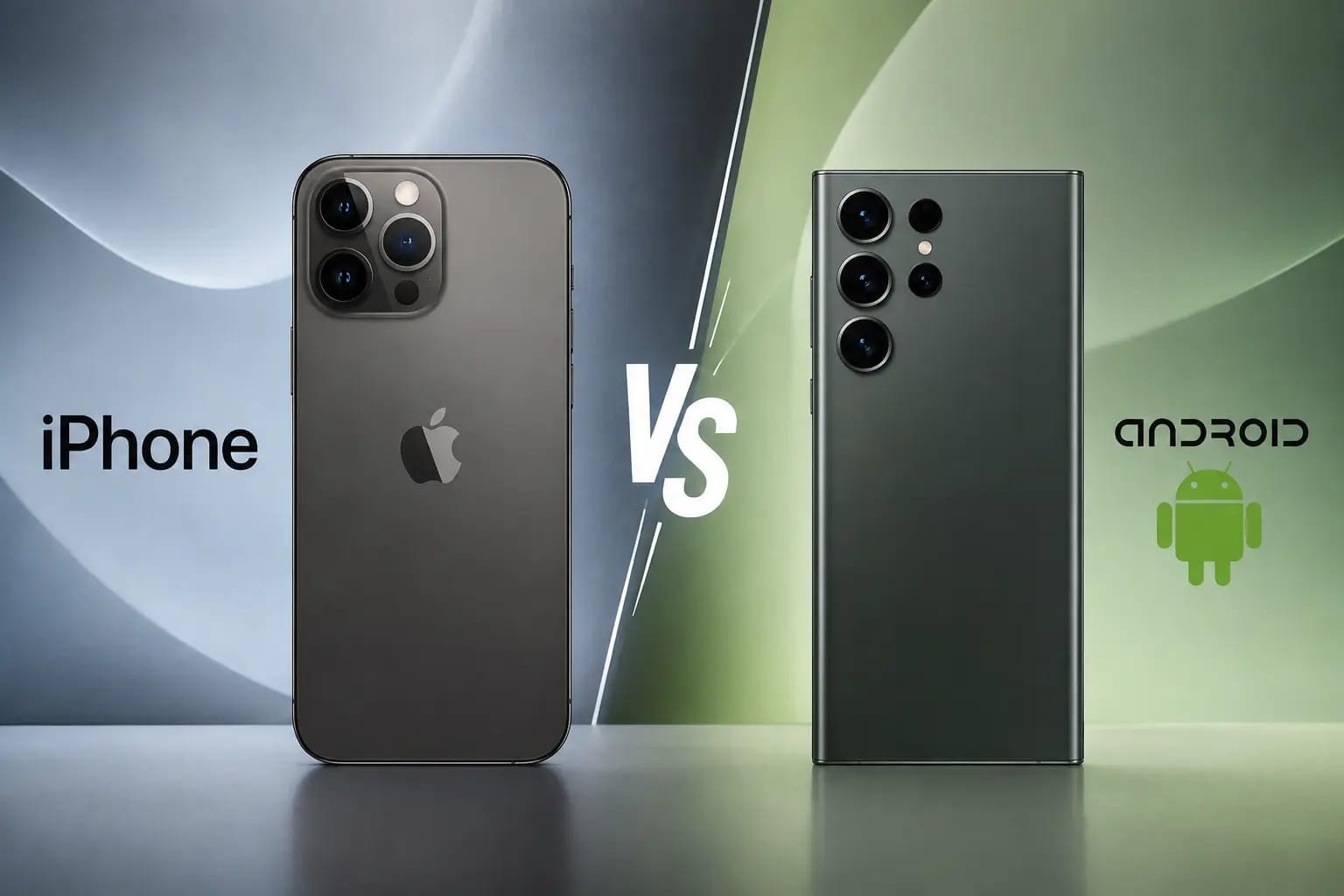
Short Direct Answer
The iPhone vs Android debate depends on your priorities. iPhones offer a polished ecosystem, long software support, and excellent optimization, while Android phones provide greater customization, wider hardware choices, competitive pricing, and innovative features. Both platforms are excellent, and the right choice depends on your budget, preferences, and daily needs.
Introduction
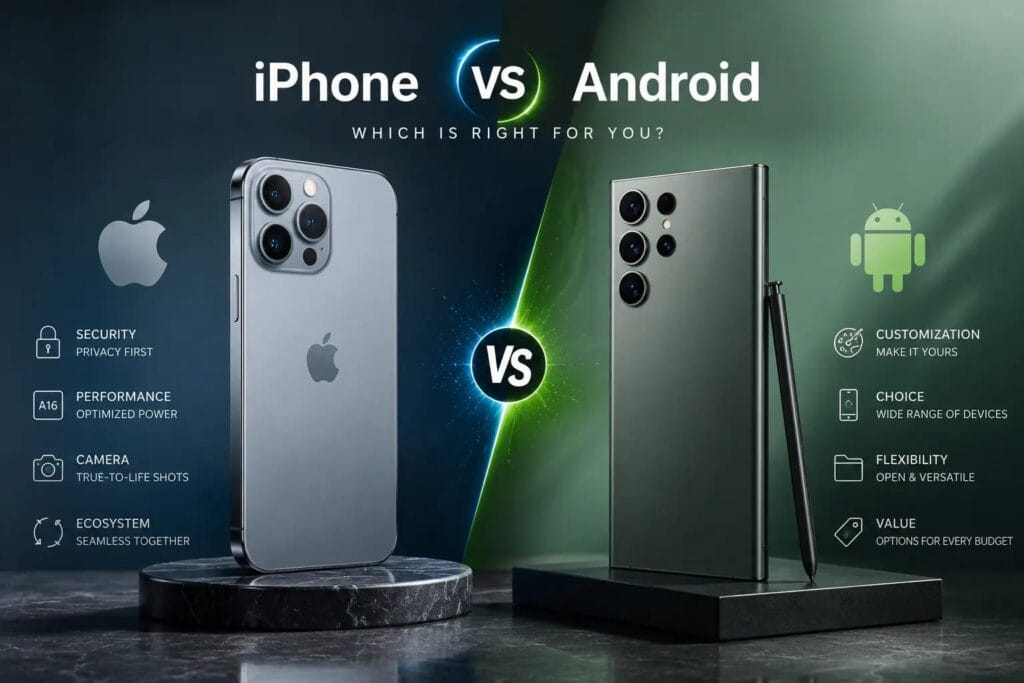
The iPhone vs Android debate has continued for years, with both platforms offering unique strengths for different types of users. Whether you’re buying your first smartphone or upgrading to a new device, choosing between Apple’s iPhone and an Android phone can significantly affect your daily experience.
For buyers in the United States, both platforms provide excellent performance, premium hardware, advanced cameras, and long-term software support. However, they differ in customization, ecosystem integration, pricing, and available device choices.
In this comparison, we’ll explore every major aspect of the iPhone vs Android discussion, including design, display, performance, software, and user experience, to help you determine which platform best fits your needs.
iPhone vs Android Overview
When comparing iPhone vs Android, it’s important to understand that you’re comparing two different smartphone ecosystems rather than individual devices.
Apple develops both the iPhone hardware and iOS software, creating a tightly integrated experience. Android, on the other hand, is used by many manufacturers, including Samsung, Google, Motorola, OnePlus, and Xiaomi, giving buyers a wider variety of devices.
Key Differences
Some of the biggest differences include:
- Operating system
- Device selection
- Customization
- Software updates
- Hardware variety
- Ecosystem integration
- Pricing options
- User interface
These differences influence the overall ownership experience.
Available Device Choices
Android offers a much larger selection of smartphones.
Buyers can choose from:
- Budget phones
- Mid-range models
- Premium flagships
- Foldable phones
- Gaming phones
Apple focuses on a smaller lineup, making the buying process simpler.
Design and Build Quality
Both iPhones and Android smartphones feature premium designs, but manufacturers take different approaches.
iPhone Design
Apple focuses on consistency and premium materials.
Common design features include:
- Premium aluminum or titanium frames
- Glass construction
- Minimalist styling
- Excellent build quality
- Strong durability
Each generation maintains a familiar appearance while introducing gradual refinements.
Android Design
Android manufacturers experiment with a wider range of designs.
Popular features include:
- Curved displays
- Foldable designs
- Unique camera layouts
- Slim bezels
- Multiple color options
Buyers have significantly more design choices.
Build Quality Comparison
Premium Android phones and iPhones both offer excellent construction.
Both platforms commonly provide:
- Water resistance
- Premium materials
- Durable glass
- Solid structural design
Build quality is excellent across flagship models.
Display Comparison
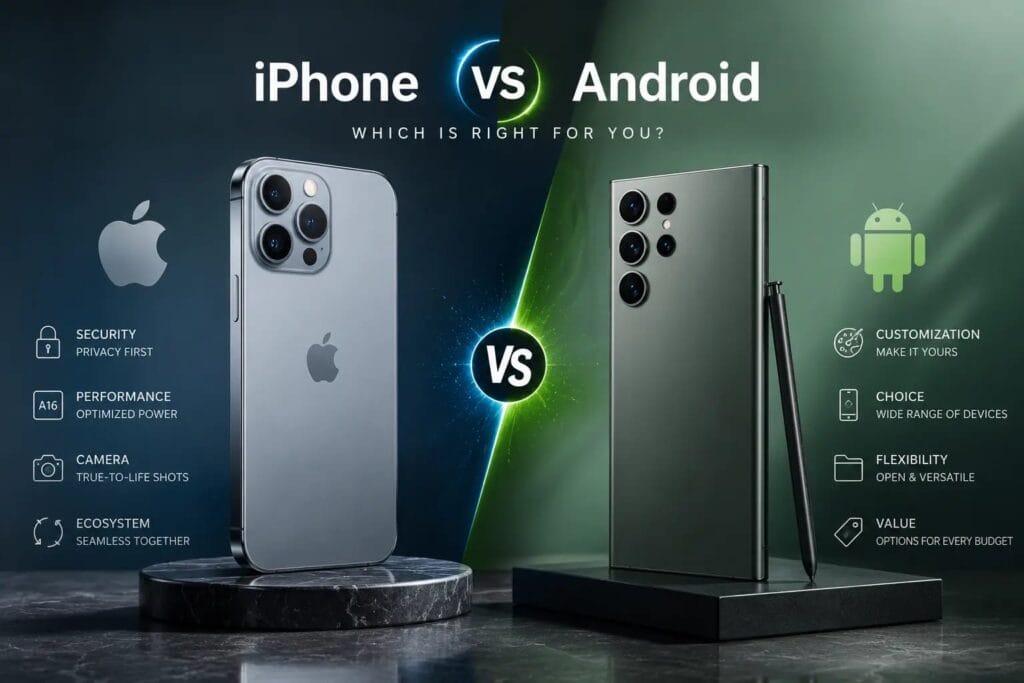
The display plays a major role in the iPhone vs Android comparison.
iPhone Displays
Modern iPhones offer bright, colorful displays with excellent color accuracy.
Advantages include:
- Sharp resolution
- Smooth refresh rates
- Excellent brightness
- HDR support
- Accurate colors
Apple focuses on delivering a consistent viewing experience.
Android Displays
Android manufacturers provide greater variety.
Available options include:
- OLED displays
- AMOLED panels
- High refresh rates
- Large screen sizes
- Foldable displays
Many flagship Android phones offer industry-leading display technology.
Which Display Is Better?
Both platforms provide excellent display quality.
The better choice depends on personal preferences such as:
- Screen size
- Brightness
- Color profile
- Refresh rate
- Device style
Most flagship smartphones deliver outstanding viewing experiences.
Performance
Performance remains one of the biggest considerations in the iPhone vs Android debate.
iPhone Performance
Apple designs its processors specifically for iPhones.
Benefits include:
- Fast app launches
- Smooth multitasking
- Excellent gaming
- Efficient power usage
- Long-term performance
Optimization between hardware and software remains one of Apple’s greatest strengths.
Android Performance
Android performance depends on the manufacturer and processor.
Premium Android phones typically offer:
- Powerful processors
- Excellent multitasking
- Strong gaming performance
- High RAM capacity
- Fast storage
Flagship Android devices easily handle demanding workloads.
Everyday Speed
For most users, both platforms perform exceptionally well.
Common activities include:
- Web browsing
- Social media
- Streaming
- Photography
- Productivity
- Mobile gaming
Everyday performance differences are minimal on modern flagship devices.
Software Experience
Software creates one of the biggest differences between iPhone vs Android.
iPhone Software
Apple’s iOS focuses on simplicity and consistency.
Users benefit from:
- Clean interface
- Smooth animations
- Reliable updates
- Strong optimization
- Simple navigation
The experience remains familiar across all supported devices.
Android Software
Android emphasizes flexibility.
Advantages include:
- Greater customization
- More personalization
- Flexible settings
- Multiple interface styles
- Broader hardware support
Different manufacturers also add unique software features.
Software Updates
Both platforms provide software support, although update policies vary by manufacturer.
Apple delivers updates directly to supported iPhones, while Android update schedules depend on the phone manufacturer.
User Interface
The user interface significantly affects everyday smartphone usage.
iPhone User Experience
Apple prioritizes consistency.
The interface offers:
- Simple navigation
- Organized settings
- Consistent gestures
- Smooth animations
- Easy learning curve
This appeals to users who prefer simplicity.
Android User Experience
Android allows greater personalization.
Users can customize:
- Home screens
- Widgets
- Icons
- Launchers
- Themes
This flexibility attracts users who enjoy tailoring their devices.
Ease of Use
Both operating systems are user-friendly.
The best choice depends on whether you prefer:
- Simplicity and consistency
- Flexibility and customization
Each platform delivers an excellent overall experience.
Part 1 Summary
The iPhone vs Android comparison begins with two outstanding smartphone ecosystems that excel in different ways. iPhones focus on seamless software optimization, premium build quality, and a consistent user experience, while Android offers greater device variety, customization, and flexibility. Both platforms provide excellent displays, fast performance, and reliable everyday usability, making either a strong choice for buyers in the United States.
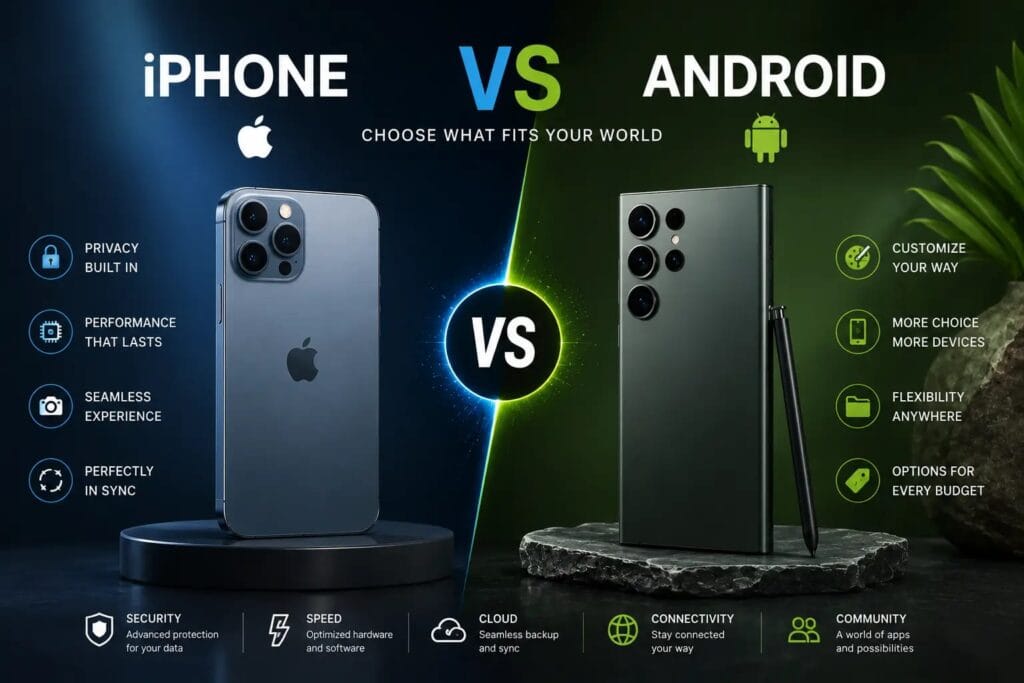
Camera Comparison
One of the biggest factors in the iPhone vs Android decision is camera performance. Both platforms offer outstanding cameras, but they approach photography differently.
iPhone Cameras
Apple focuses on consistency and natural image processing.
Advantages include:
- Accurate colors
- Reliable autofocus
- Excellent video recording
- Strong low-light performance
- Consistent image quality
The camera delivers dependable results in almost every situation.
Android Cameras
Android manufacturers offer a wide variety of camera systems.
Many flagship phones include:
- High-resolution sensors
- Periscope zoom lenses
- Ultra-wide cameras
- AI-powered photography
- Professional camera controls
Buyers have more hardware choices depending on their needs.
Which Camera Is Better?
The better camera depends on your priorities.
Choose an iPhone if you value:
- Natural colors
- Smooth video recording
- Reliable point-and-shoot performance
Choose Android if you prefer:
- More camera options
- Higher zoom capabilities
- Greater manual controls
Both platforms produce outstanding photos and videos.
Battery Life
Battery performance varies between devices rather than operating systems alone.
iPhone Battery Life
Modern iPhones deliver reliable battery life through efficient hardware and software optimization.
Benefits include:
- Efficient power management
- Stable daily performance
- Optimized background processes
- Consistent battery health
Most users can comfortably get through a full day.
Android Battery Life
Android phones often offer larger batteries.
Advantages include:
- Higher battery capacities
- Longer endurance on some models
- Various battery-saving modes
- Flexible charging options
Battery life depends on the manufacturer and model.
Everyday Battery Performance
Both platforms provide dependable battery life for:
- Web browsing
- Video streaming
- Gaming
- Social media
- Navigation
- Productivity
Premium devices from both ecosystems perform well throughout the day.
Charging Comparison
Charging technology differs significantly in the iPhone vs Android comparison.
iPhone Charging
Apple supports convenient charging methods.
Features include:
- Wired charging
- Wireless charging
- Magnetic charging compatibility
- Optimized battery charging
Apple prioritizes battery longevity and consistent performance.
Android Charging
Many Android manufacturers emphasize charging speed.
Common features include:
- Ultra-fast wired charging
- Fast wireless charging
- Reverse wireless charging
- High-capacity charging systems
Some Android phones recharge considerably faster than most iPhones.
Security and Privacy
Security remains one of the strongest aspects of both platforms.
iPhone Security
Apple places a strong emphasis on privacy.
Advantages include:
- Regular security updates
- Strong encryption
- Secure app permissions
- Privacy-focused features
- Reliable biometric authentication
These features help protect personal information.
Android Security
Android has also improved significantly in recent years.
Modern Android phones provide:
- Regular security patches
- Biometric authentication
- App permission controls
- Device encryption
- Privacy dashboards
Security quality depends partly on the manufacturer.
Privacy Comparison
Both platforms offer strong privacy protections, although Apple generally emphasizes privacy as a central part of its ecosystem.
App Ecosystem
Applications are essential for every smartphone.
iPhone App Experience
The Apple App Store offers:
- High-quality applications
- Strong developer support
- Consistent optimization
- Reliable updates
Most major apps arrive on iPhone quickly.
Android App Experience
Google Play provides:
- Large app selection
- Greater flexibility
- Alternative app stores
- Broader compatibility
Android users often enjoy more installation options.
Customization
Customization creates one of the biggest differences in the iPhone vs Android debate.
iPhone Customization
Apple has expanded customization options in recent years.
Users can personalize:
- Home screens
- Widgets
- Wallpapers
- Lock screens
However, customization remains relatively controlled.
Android Customization
Android offers significantly more flexibility.
Users can modify:
- Launchers
- Icons
- Themes
- Widgets
- System appearance
This makes Android appealing to users who enjoy personalizing their devices.
Pricing and Value
Price plays a major role when comparing smartphones.
iPhone Pricing
Apple focuses primarily on premium devices.
Benefits include:
- High resale value
- Long software support
- Strong durability
- Excellent ecosystem integration
Many buyers consider the higher price worthwhile.
Android Pricing
Android offers devices across nearly every price category.
Buyers can choose:
- Budget phones
- Mid-range models
- Premium flagships
- Foldable devices
This flexibility makes Android accessible to a wider audience.
Overall Value
The best value depends on your needs.
An iPhone may provide better long-term value through software support and resale value, while Android offers greater hardware variety and pricing flexibility.
Part 2 Summary
The iPhone vs Android comparison becomes even more competitive when looking at cameras, battery life, charging, security, apps, customization, and pricing. iPhones excel in software optimization, privacy, and long-term support, while Android offers greater customization, faster charging options, broader hardware selection, and devices for nearly every budget. Both ecosystems provide excellent overall value for buyers in the United States.
Pros of iPhone
The iPhone offers a polished experience with strong hardware and software integration. It is an excellent choice for users who value simplicity, security, and long-term reliability.
Major Advantages
Key benefits include:
- Smooth performance
- Long software support
- Excellent security
- Premium build quality
- Reliable cameras
- Strong resale value
- Seamless Apple ecosystem
These strengths make the iPhone popular among many users in the United States.
Pros of Android
Android provides greater flexibility and a wider selection of smartphones.
Major Advantages
Android users enjoy:
- More device choices
- Greater customization
- Budget-friendly options
- Fast charging on many models
- Innovative hardware
- Foldable phone options
- Expandable features on some devices
Its flexibility makes Android suitable for many different budgets and lifestyles.
Cons of iPhone
Although iPhones are excellent smartphones, there are some limitations.
Common Drawbacks
Some users may notice:
- Higher purchase prices
- Limited customization
- Smaller device selection
- Less flexibility compared to Android
These factors may influence buying decisions.
Cons of Android
Android also has a few disadvantages depending on the manufacturer.
Common Drawbacks
Potential limitations include:
- Software updates vary by brand
- Different user interfaces
- Inconsistent app optimization on some devices
- Quality varies across manufacturers
Choosing a reputable Android brand helps minimize these issues.
Who Should Choose iPhone?
The iPhone is ideal for users who prioritize simplicity, security, and ecosystem integration.
Best For
An iPhone is a great choice for:
- Apple ecosystem users
- Professionals
- Students
- Content creators
- First-time smartphone buyers
- Long-term owners
The seamless experience makes daily use straightforward.
Who Should Choose Android?
Android is perfect for users who value flexibility and variety.
Best For
Android is recommended for:
- Budget-conscious buyers
- Technology enthusiasts
- Mobile gamers
- Photography enthusiasts
- Users who enjoy customization
- Buyers wanting more hardware choices
Its wide selection allows users to find a phone that fits nearly every budget.
Expert Buying Tips
Before deciding between iPhone vs Android, consider the following advice.
Think About Your Budget
Choose a smartphone that fits your financial plan.
Options include:
- Entry-level devices
- Mid-range phones
- Premium flagships
Both platforms offer excellent choices depending on your budget.
Consider Your Ecosystem
If you already own devices like tablets, laptops, or smartwatches, staying within the same ecosystem often provides a smoother experience.
Compare Features
Focus on features that matter most to you, such as:
- Camera quality
- Battery life
- Display
- Software
- Performance
- Charging speed
Comparing your priorities helps you make the right decision.
Think Long Term
Consider how long you plan to keep your smartphone.
Factors include:
- Software support
- Battery performance
- Resale value
- Overall durability
A long-term perspective can improve overall value.
Frequently Asked Questions
1 Which is better, iPhone or Android?
There is no universal winner. The best choice depends on your budget, preferred features, and personal preferences.
2 Is iPhone more secure than Android?
Both platforms provide strong security, although Apple places greater emphasis on privacy and delivers software updates directly to supported devices.
3 Which platform has better cameras?
Both offer excellent cameras. iPhones are known for consistent photo and video quality, while many flagship Android phones provide greater zoom capabilities and additional camera options.
4 Is Android cheaper than iPhone?
Generally, yes. Android includes devices across budget, mid-range, and premium price categories, while Apple primarily focuses on premium smartphones.
5 Which platform lasts longer?
Both platforms can last for many years with proper care. Software support varies depending on the Android manufacturer, while Apple provides long-term updates for supported iPhones.
Final Verdict
The iPhone vs Android debate ultimately comes down to personal preference. iPhones deliver a polished ecosystem, long software support, and outstanding optimization, while Android offers unmatched flexibility, wider hardware choices, and devices for nearly every budget. Both platforms provide excellent smartphones capable of meeting the needs of most users.
Overall Comparison
| Category | iPhone | Android |
|---|---|---|
| Design & Build | ⭐⭐⭐⭐⭐ | ⭐⭐⭐⭐⭐ |
| Display | ⭐⭐⭐⭐⭐ | ⭐⭐⭐⭐⭐ |
| Performance | ⭐⭐⭐⭐⭐ | ⭐⭐⭐⭐⭐ |
| Cameras | ⭐⭐⭐⭐⭐ | ⭐⭐⭐⭐⭐ |
| Battery Life | ⭐⭐⭐⭐☆ | ⭐⭐⭐⭐⭐ |
| Customization | ⭐⭐⭐☆☆ | ⭐⭐⭐⭐⭐ |
| Security | ⭐⭐⭐⭐⭐ | ⭐⭐⭐⭐☆ |
| Value for Money | ⭐⭐⭐⭐☆ | ⭐⭐⭐⭐⭐ |
Read More: Xiaomi Redmi Watch 5 Active Review: Is It Worth Buying in 2026?
Conclusion
The iPhone vs Android choice depends on your needs. Choose iPhone for a seamless ecosystem and long-term support, or choose Android for greater flexibility, wider device options, and excellent value.