
Short Direct Answer
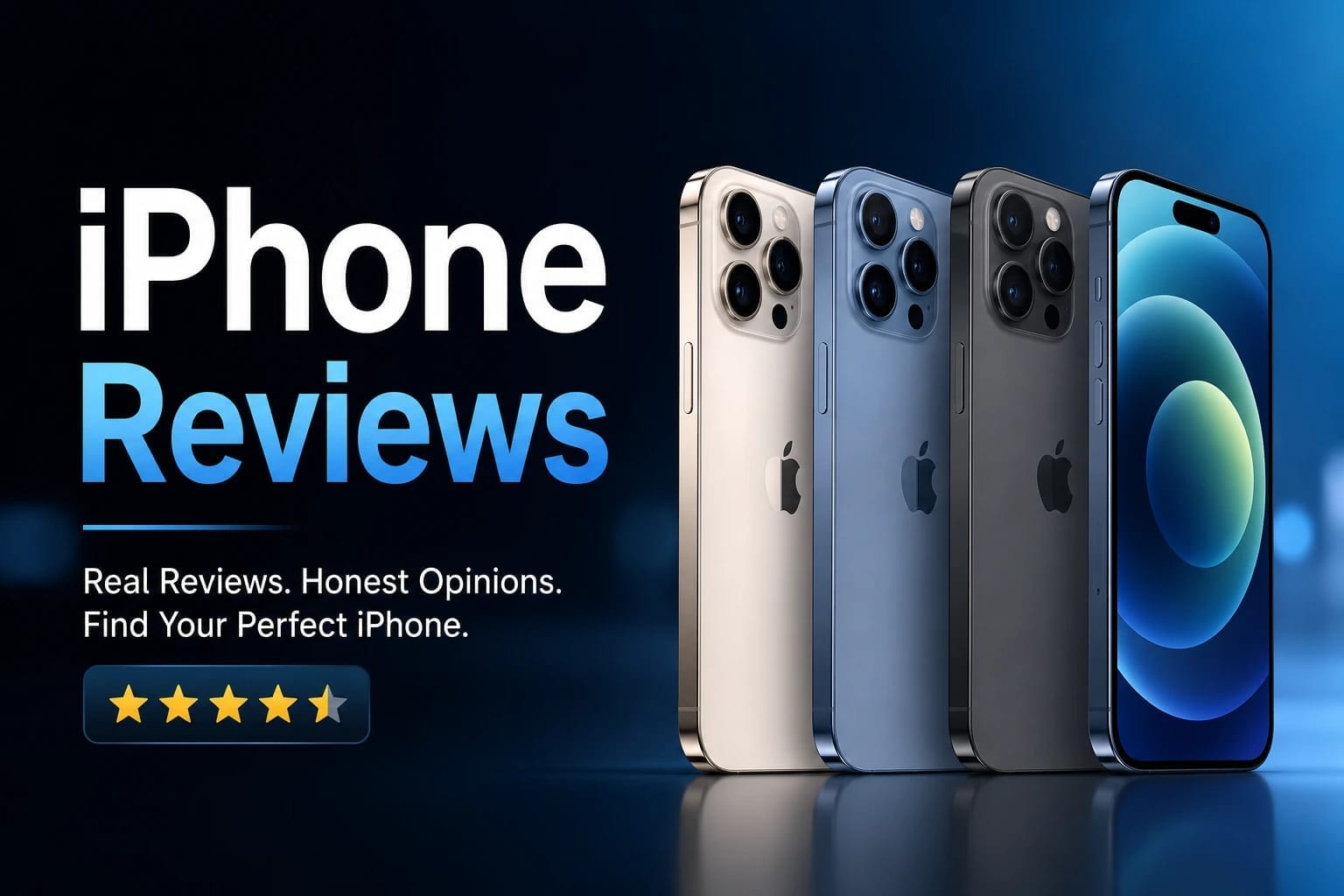
iPhone reviews are most useful when they explain how a current model fits real life, not simply whether it is expensive or popular. In 2026, Apple’s lineup includes iPhone 17, iPhone Air, iPhone 17 Pro, iPhone 17 Pro Max, and iPhone 17e. The iPhone 17 is the balanced choice, with a 6.3-inch OLED display, ProMotion up to 120Hz, an A19 chip, dual 48MP rear cameras, USB-C, and Apple Intelligence. The Air emphasizes thinness, while Pro models target demanding photography, gaming, and creative work.
iPhone Reviews and Core Experience
iphone reviews: Buying an iPhone today is mainly about matching features to habits. Apple offers several sizes, camera systems, and performance levels, so the best model depends on how you use a phone. A student may want light weight and long battery life. A creator may need advanced cameras and faster file transfers. Someone upgrading from an older device may care more about display quality and software features.
For most buyers, the iPhone 17 is the starting point. Apple gives it a 6.3-inch Super Retina XDR OLED display with Always-On capability and adaptive ProMotion refresh rates up to 120Hz. Storage starts at 256GB, while the A19 chip provides plenty of power for everyday apps, gaming, photography, and multitasking.
iPhone Key Specifications
| Feature | iPhone 17 |
|---|---|
| Display | 6.3-inch Super Retina XDR OLED |
| Refresh rate | ProMotion, up to 120Hz |
| Processor | A19 |
| Storage | 256GB, 512GB |
| Rear cameras | 48MP Main + 48MP Ultra Wide |
| Front camera | 18MP Center Stage |
| Video | 4K Dolby Vision up to 60 fps |
| Connectivity | 5G, Wi-Fi 7, Bluetooth 6, USB-C |
| Water resistance | IP68 |
| Wireless charging | MagSafe and Qi2 up to 25W |
| Software | iOS with Apple Intelligence |
| SIM | Dual eSIM |
These are Apple’s published iPhone 17 specifications.
Display and Design
The iPhone 17’s display is one of its biggest improvements for everyday users. ProMotion makes scrolling, animations, and supported games feel smoother than a conventional 60Hz panel. The OLED screen also delivers strong contrast, HDR support, and a very bright outdoor mode. Apple rates outdoor peak brightness at 3,000 nits, while the minimum brightness reaches one nit.
The aluminum body keeps the standard model relatively manageable, and Ceramic Shield 2 protects the front. An IP68 rating adds dust and water resistance under laboratory conditions. Buyers should still avoid treating water resistance as permanent protection because seals can weaken with age or damage.
Performance and Gaming
The A19 chip gives the standard iPhone 17 a performance foundation. Apple specifies a six-core CPU, five-core GPU with Neural Accelerators, and 16-core Neural Engine. Hardware-accelerated ray tracing also supports advanced graphics effects.
Daily performance should feel effortless. Apps open quickly, multitasking is responsive, and demanding games can run at high settings. Long gaming sessions can produce warmth, especially with high brightness and cellular data, but heat varies with workload and environment. Heavy creators who render large projects for long periods should consider a Pro model for additional performance headroom.
Camera Quality
Photography is another major strength. The iPhone 17 has a 48MP Fusion Main camera and a 48MP Fusion Ultra Wide camera. The main camera includes sensor-shift optical stabilization and supports 24MP and 48MP photos. The Ultra Wide adds wider framing and macro photography, making the system more versatile for travel, architecture, food, and group pictures.
Video is strong. The phone records 4K Dolby Vision video up to 60 frames per second, while Night mode, Smart HDR 5, Photonic Engine, and current Photographic Styles help with different scenes. The camera cannot replace a dedicated interchangeable-lens system, but it is more than capable for family memories, social content, travel videos, and many professional mobile projects.
Battery and Charging
Battery life depends on brightness, cellular signal, gaming, camera use, and background activity. For that reason, Apple’s playback figures should be treated as controlled reference points rather than promises about every user’s day. Heavy users should compare the exact model because battery capacity and endurance differ across the lineup.
The iPhone 17 supports MagSafe and Qi2 wireless charging up to 25W. USB-C handles charging and accessories, but the standard model uses USB 2 data speeds. Anyone moving large video files regularly may find the Pro models more suitable.
Software and Apple Intelligence
iOS remains a major reason people choose iPhone. The interface is consistent, Apple’s own apps work closely with the hardware, and services such as AirDrop, FaceTime, Apple Pay, and Find My add practical value. Apple Intelligence is also built into supported experiences, providing AI-assisted tools for communication, writing, and other tasks.
iPhone Air
The iPhone Air is aimed at buyers who value a very thin, light design. Apple lists a 6.5-inch OLED display, a 165-gram weight, and a 5.64mm thickness. It uses an A19 Pro chip and offers 256GB, 512GB, or 1TB storage.
Its 48MP Fusion Main camera and 18MP Center Stage front camera are capable, but Apple confirms that the iPhone 17 adds a 48MP Ultra Wide camera that the Air does not have. The Air therefore makes sense when thinness and screen size matter more than camera flexibility.
iPhone 17 Pro and Pro Max: iphone reviews
The Pro models are designed for users who want more performance and camera capability. The A19 Pro platform is paired with a six-core GPU in the Pro models, while the Air has five GPU cores. That extra graphics capability matters most for demanding games, creative apps, and sustained workloads.
The Pro Max adds a 6.9-inch display and is aimed at buyers who want the largest viewing area. It is excellent for video, editing, reading, and gaming, but the larger body is less convenient for one-handed use. Choose Pro models because you need their features, not simply because they sit at the top of the range.
Pros and Cons
Pros
- Excellent OLED displays with smooth ProMotion scrolling.
- Strong performance across the current lineup.
- High-quality cameras and dependable video recording.
- Excellent integration with Apple devices and accessories.
- USB-C, 5G, Wi-Fi 7, MagSafe, and modern connectivity.
- Apple Intelligence on supported models.
Cons
- Premium models can be expensive.
- Several models make the lineup harder to compare.
- Standard iPhone 17 uses USB 2 data speeds.
- iPhone Air sacrifices an Ultra Wide camera for thinness.
- Pro Max is large and less comfortable for one-handed use.
Real-World Testing
A useful iPhone review should test more than benchmark scores. Start with messaging, maps, music, web browsing, calls, and photography during a normal day. Then add gaming, 4K video recording, photo editing, and multitasking. Watch battery drain and surface temperature during extended workloads.
Camera testing should cover daylight, indoor scenes, night shots, portraits, moving subjects, Ultra Wide photos, and stabilized video. Display testing should include sunlight, dark rooms, scrolling, streaming, and touch response. Finally, test cellular and Wi-Fi performance in the places where the phone will actually be used. This method produces a more useful buying recommendation than synthetic numbers alone.
iPhone Reviews, Comparisons, and Buying Advice
Price and Availability: Iphone reviews
Apple’s current comparison page lists iPhone 17, iPhone Air, iPhone 17 Pro, iPhone 17 Pro Max, and iPhone 17e. Prices, storage choices, promotions, trade-in offers, and regional availability can change, so buyers should confirm the current total cost before purchasing. Apple provides direct model comparison tools for checking current specifications.
Storage deserves careful thought. The iPhone 17 starts at 256GB, while the Air reaches 1TB. Heavy video users, large-game libraries, and long-term owners may benefit from higher capacity.
iPhone 17 vs iPhone Air
The iPhone 17 is the better all-rounder. Its dual 48MP rear cameras provide an Ultra Wide option that the Air lacks. The Air counters with a 6.5-inch display and a notably thin, light body. Both provide modern OLED displays, Apple Intelligence, USB-C, and strong processors.
Choose Air if design and low weight are priorities. Choose iPhone 17 if camera flexibility and balanced value matter more. Neither model is a poor choice; they simply target different preferences.
iPhone 17 vs iPhone 17 Pro
The Pro is aimed at demanding users. It offers the A19 Pro platform and stronger graphics capability, along with a more advanced camera system. The standard iPhone 17 remains the better value for messaging, streaming, everyday photography, social media, normal gaming, and general productivity.
Creators should pay for the Pro when its camera and performance features will be used regularly. Otherwise, the standard model delivers most of the experience at a lower level of complexity.
iPhone 17 Pro vs Pro Max
The Pro Max is primarily a choice for people who want a larger screen and maximum battery potential. The smaller Pro is easier to carry and handle. Both are premium phones, so screen size and comfort should guide the decision.
iPhone vs Android
Samsung Galaxy and Google Pixel phones remain strong alternatives. Galaxy devices often emphasize customization, multitasking, displays, and zoom. Pixel phones are known for Google’s software and computational photography. iPhone stands out for video, ecosystem integration, polished third-party apps, and accessory support.
Android is attractive for buyers who want deeper customization or a wider range of hardware prices. iPhone is compelling for people already using a Mac, iPad, or Apple Watch. The better platform is the one that fits your existing habits.
Who Should Buy an iPhone?
iphone reviews: Buy an iPhone if you want dependable performance, strong video, a polished operating system, and close integration with Apple products. The iPhone 17 is the best starting point for most users. Creators should consider Pro models, while design-focused buyers may prefer Air.
Who Should Avoid It?
Avoid iPhone if your top priority is the lowest possible hardware price, extensive operating-system customization, or expandable storage. Android offers strong alternatives in those areas. Owners of recent iPhones should also compare real improvements before upgrading because a newer model is not automatically a better value.
More Information About Reviews, Please Visit Our Website: Metro by T-Mobile Reviews: Honest Guide to Plans, Coverage, and Value
Apple Air Phone Camera Review: Is the iPhone Air Worth Buying?
Samsung Galaxy A56 Specifications: Features & Details
Huawei Pura 80 Ultra: Specs, Camera, Features & Review
Samsung Best Camera Phone: Top Galaxy Camera Phones
Huawei P30 Pro: Features, Performance, Camera and More
Best Budget Smartphones: Top Affordable Picks
iPhone 13 Pro Max Review: A Premium Apple Flagship in 2026
REDMAGIC 10S Pro Review: Is This Gaming Phone Worth It?
Frequently Asked Questions
Which iPhone is best for most people?
The iPhone 17 is the strongest all-round choice. It combines a 6.3-inch 120Hz OLED display, A19 performance, dual 48MP rear cameras, modern connectivity, and 256GB starting storage.
Is iPhone Air worth buying?
It is a good fit for people who prioritize thinness, light weight, and a larger display. The trade-off is reduced rear-camera flexibility compared with iPhone 17.
Is iPhone good for gaming?
Yes. Current models provide strong processors and graphics performance. Pro models are better for sustained demanding gaming, while iPhone 17 is sufficient for most players.
Are iPhone cameras good enough for professional work?
They can be excellent for many professional and social-video projects, especially video. Dedicated cameras still offer greater lens choice, sensor flexibility, and manual control.
Should I buy more storage?
Buy more storage if you record lots of high-resolution video, keep large offline libraries, or plan to use the phone for many years. Otherwise, the base capacity may be enough.
Should I upgrade from an older iPhone?
Upgrade when a newer display, camera, battery, performance, or connectivity feature solves a real problem. Owners of much older models will usually see larger benefits than people with recent devices.
Conclusion
iphone reviews: iPhone remains a strong choice for buyers who want fast performance, excellent cameras, smooth software, and long-term ecosystem support. The iPhone 17 is the best all-round option, while Air suits design-focused users and Pro models are better for serious creators. If you value simplicity, reliability, and premium quality, iPhone is worth considering.