Smart Vending Machine Review: Features, Technology, Benefits, and What to Know Before You Buy
SHORT DIRECT ANSWER
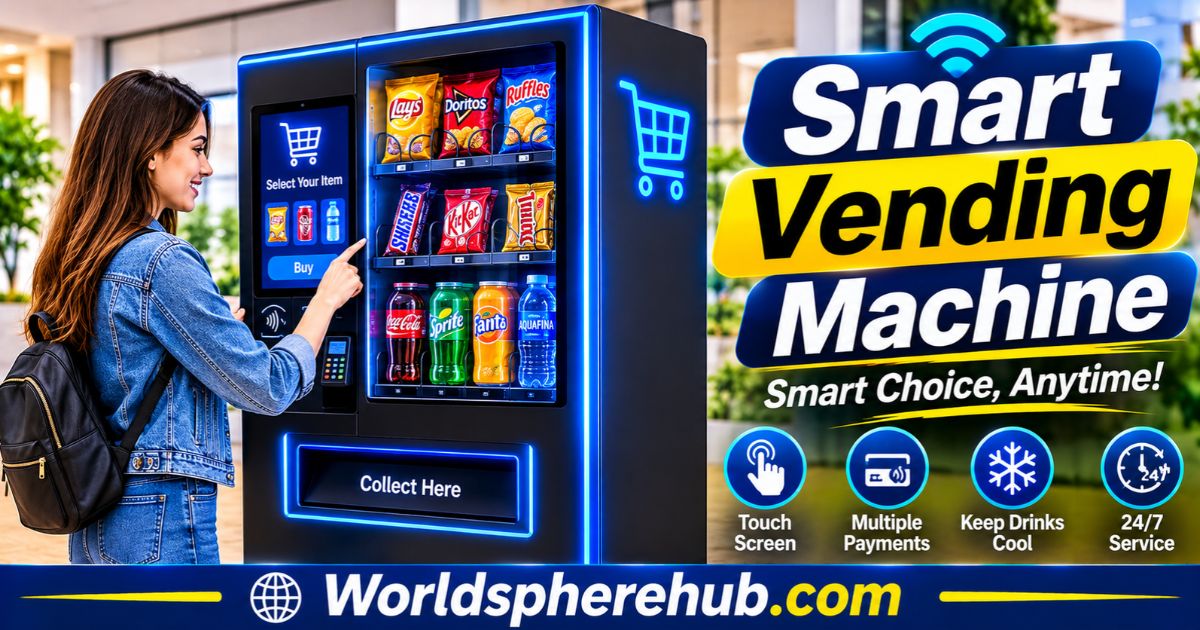
A smart vending machine is an internet-connected vending machine with cashless payments, remote inventory and health monitoring, and often touchscreens or AI-powered smart cooler features. It helps operators reduce stockouts and shrinkage while giving customers faster 24/7 self-service, though connectivity, upfront investment, and maintenance matter.
Smart Vending Machine Types at a Glance
| Type | What it is | Best for |
|---|---|---|
| Connected traditional machine | Classic spiral or glass-front machine with a cashless reader and telemetry | Snacks and drinks in high-traffic spots |
| Touchscreen vending machine | Large interactive display for browsing, promotions, and payment | Retail-style experiences and digital advertising |
| Smart cooler or smart fridge | Locked refrigerator that unlocks with payment and tracks items | Fresh food, drinks, and grab-and-go items |
| Micro market kiosk | Open shelves with self-checkout | Offices, residential buildings, and break rooms |
| Specialty smart machine | Dispenses coffee, power banks, and other products | Niche locations with specific needs |
Core Smart Vending Machine Features
Cashless Payments
Cashless payments are the foundation of modern vending. One industry report found that smartphone-enabled contactless payments have become common, pushing operators to retrofit machines with payment modules that also provide telemetry. Nayax, one of the largest providers, lists support for swipe, contact, contactless, and QR code payments plus prepaid cards on its smart cooler, and advertises over 80 payment methods across its platform.
For customers, that means you can tap a card or phone and go. Many systems also provide digital receipts, which is convenient for expense tracking.
Telemetry and Remote Management
Telemetry is the data connection that makes a machine “smart.” Connected machines report stock levels, sales, power status, and machine health to a cloud dashboard. Operators can see which products sell fastest, schedule restocking trips, and respond to faults sooner. A remote management portal can also push software updates and send alerts when something goes wrong.
Industry coverage notes that this real-time visibility is laying the groundwork for data-driven inventory and maintenance, which helps reduce wasted trips and empty shelves.
Touchscreens and Digital Signage
Many newer machines use interactive touchscreens that let customers browse products, view nutritional information, and see promotions. Industry reporting says touchscreen signage now doubles as a media channel, delivering targeted promotions and nutritional information, which can create extra revenue for operators. Some systems offer multilingual interfaces, helpful in airports, universities, and multicultural neighborhoods.
AI Smart Coolers
Smart coolers are the most advanced category. Nayax’s Nova Smart Cooler, for example, is described as a smart lock refrigerator with AI-powered product recognition, contactless payment integration, real-time remote inventory tracking, temperature monitoring and alerts, an interactive touchscreen, and a remote management portal. The idea is simple: you pay, the door unlocks, you take what you want, and the system recognizes what you took and charges you.
Other listed features include dynamic shelving, instant product recognition at checkout, 24/7 monitoring, and a NAMA-certified dual-function smart lock. The company says these systems are plug and play and aim to reduce shrinkage and staffing needs.
Market Momentum
Connected vending is growing quickly. IoT Business News reported that there were about 8.1 million connected vending machines worldwide in 2025, with a forecast of 11.7 million by 2030, which represents a compound annual growth rate of 7.6 percent. Cantaloupe in the United States and Nayax in Israel each power roughly 900,000 machines, according to the report. Cashless adoption is described as the engine behind the connectivity boom.
Benefits for Operators
| Benefit | How it helps |
|---|---|
| Real-time inventory | Restock only what is needed and avoid empty shelves |
| Cashless sales | Faster transactions and a bigger audience, including people who carry no cash |
| Remote monitoring | Catch temperature or power problems early |
| Sales analytics | See top sellers, slow items, and location performance |
| Reduced labor | Fewer unnecessary service visits |
| Impulse sales | Touchscreens and promotions encourage extra purchases |
| Lower shrinkage | Smart locks and product recognition cut loss and theft |
Benefits for Customers
For customers, the improvements are easy to notice. Payment is faster and more flexible, and more products are available around the clock, even in places where staffed stores are closed. Smart coolers can offer fresh food and snacks at any hour, with simple checkout and digital receipts. Clear product information and multilingual screens make machines easier to use.
Hardware and Design
Hardware varies by category. Traditional machines use spirals, trays, or lifts to deliver products, while smart coolers use refrigeration, locks, sensors, and cameras. Many are designed for simple installation, and Nayax describes its smart cooler as plug and play. Look for a sturdy cabinet, reliable refrigeration, accessible controls, and a screen that is bright enough for the installation location.
Connectivity is just as important. Machines usually connect through cellular or Wi-Fi networks, so signal strength at the location matters. A machine in a basement with a weak signal may have trouble reporting data or processing payments.
Software, Data, and Integration
The software layer is where smart vending machines stand out. Key capabilities include:
- Real-time stock synchronization
- Sales reports and trend analysis
- Remote software updates
- Alerts for temperature, power, and inventory problems
- Integration with payment, loyalty, and analytics tools
Industry coverage suggests the companies that can integrate payments, device management, and retail analytics at scale will capture the most value, which means choosing a platform with strong support is as important as choosing a machine.
Security and Privacy
Security covers three areas: payments, physical security, and data. Cashless readers should use secure payment standards, and a reputable payment provider can reduce risk. Smart locks and tamper alerts help protect stock, while remote monitoring flags unusual activity.
Privacy is a growing concern with AI cameras. Smart coolers that use product recognition may include cameras inside the cabinet. Operators should be clear about what is recorded, how long data is stored, and how customers are informed. As a customer, look for signage explaining how the machine works, and ask the operator if you have concerns.
Limitations and Challenges
Smart vending machines are not perfect. Common challenges include:
- Connectivity dependence: Weak networks can delay payments and data reporting
- Upfront investment: Smart hardware and software cost more than basic machines
- Payment and platform fees: Cashless processing and software services add ongoing costs
- Product recognition errors: AI can occasionally misidentify items
- Maintenance: Screens, sensors, locks, and refrigeration need regular care
- Regulations and food safety: Fresh food needs reliable temperature control and compliance
- Vandalism and theft: Any unattended machine can be a target
What to Look For When Buying
| Feature to check | Why it matters |
|---|---|
| Payment options | More methods mean more customers can buy |
| Connectivity | Cellular and Wi-Fi support for reliable reporting |
| Remote management portal | Easier stock, price, and fault control |
| Refrigeration and monitoring | Essential for food safety and product quality |
| Lock and security design | Protects inventory and reduces shrinkage |
| Touchscreen quality | Affects usability and promotions |
| Software updates and support | Keeps the machine secure and working |
| Accessibility | Easy reach, clear screens, and compliance with local rules |
Where Smart Vending Machines Work Best
Smart vending is a good fit for places with steady foot traffic and limited access to shops: offices, hospitals, schools, gyms, apartment buildings, hotels, transit stations, and laundromats. Nayax also highlights related use cases beyond snacks, including coffee machines, smart screens, shared power banks, EV chargers, and amusement machines, which shows how broad the connected-kiosk concept has become.
Strengths and Limitations
| Strengths | Limitations |
|---|---|
| Cashless and flexible payments | Needs reliable connectivity |
| Real-time inventory and monitoring | Higher upfront cost than basic machines |
| 24/7 self-service convenience | Ongoing platform and payment fees |
| Smart coolers reduce shrinkage | Camera privacy questions |
| Data-driven restocking | Requires maintenance and support |
Who Should Consider a Smart Vending Machine?
Smart vending machines suit small business owners, property managers, workplace administrators, and entrepreneurs who want a low-staff retail option. They also make sense for existing operators who want better data and fewer wasted service trips.
If you only need a basic soda machine in a low-traffic area, a simpler connected machine may be enough. If you plan to sell fresh food or high-value items, a smart cooler with strong security and monitoring is worth a closer look. Pricing, regulations, and vendor support vary by region, so compare providers and ask for a demo before you commit.
Frequently Asked Questions
1: What makes a vending machine “smart”?
It connects to the internet, accepts cashless payments, and reports sales and machine health to a remote dashboard. Many also include touchscreens, smart locks, or AI product recognition.
2: How do smart coolers know what I took?
Smart coolers use sensors and AI-powered product recognition to identify items removed from the cabinet. You pay or authenticate, the door unlocks, and the system charges you for what you take.
3: Are smart vending machines safe to pay at?
They use payment readers designed for secure card and mobile payments. Choose machines from reputable operators and check for clear signage and receipts.
4: How many connected vending machines exist?
IoT Business News reported about 8.1 million connected vending machines worldwide in 2025, with a forecast of 11.7 million by 2030.
5: Do smart vending machines need Wi-Fi?
They need a data connection, typically cellular or Wi-Fi, to process payments and report inventory. Without a good signal, performance can suffer.
Explore More Continue Reading Our Guide on: VCR TV Guide: How to Watch VHS Tapes on a Modern TV in 2026
VHS TV Combo Review: Vintage CRT TV/VCRs, New RetroBox, and What to Know Before You Buy
Best Laptop Cooling Pad: Top Picks, Types, and How to Choose in 2026
DJI Mini 4 Pro: Features and Key Benefits
LG OLED TV Review: 2026 B6, C6, G6, and W6 Compared
Conclusion
A smart vending machine adds modern cashless payments, remote inventory tracking, telemetry, touchscreens, and AI smart cooler options for 24/7 self-service retail convenience. Key limitations include connectivity needs, upfront investment, payment fees, privacy questions around cameras, and ongoing maintenance requirements.